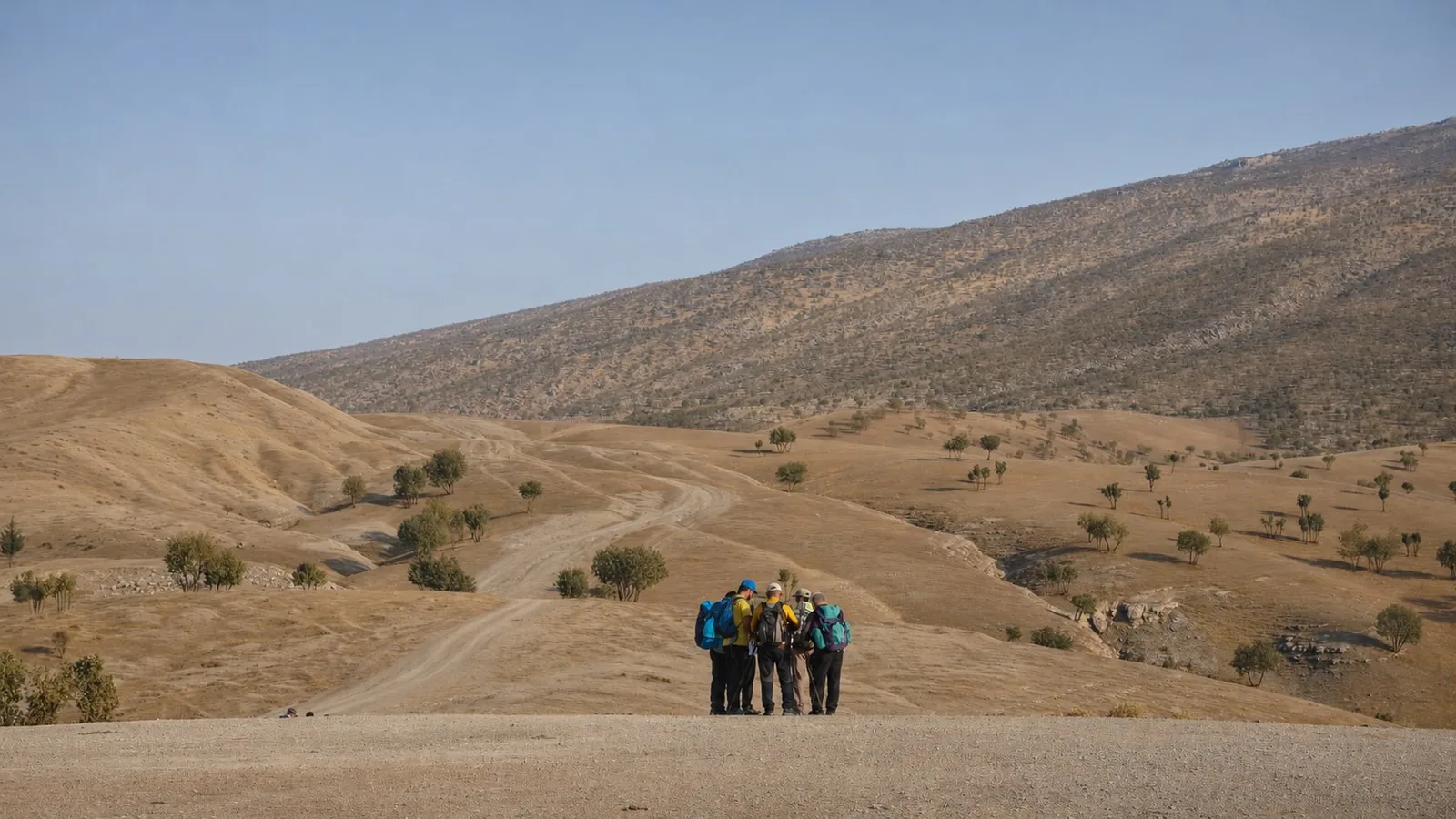

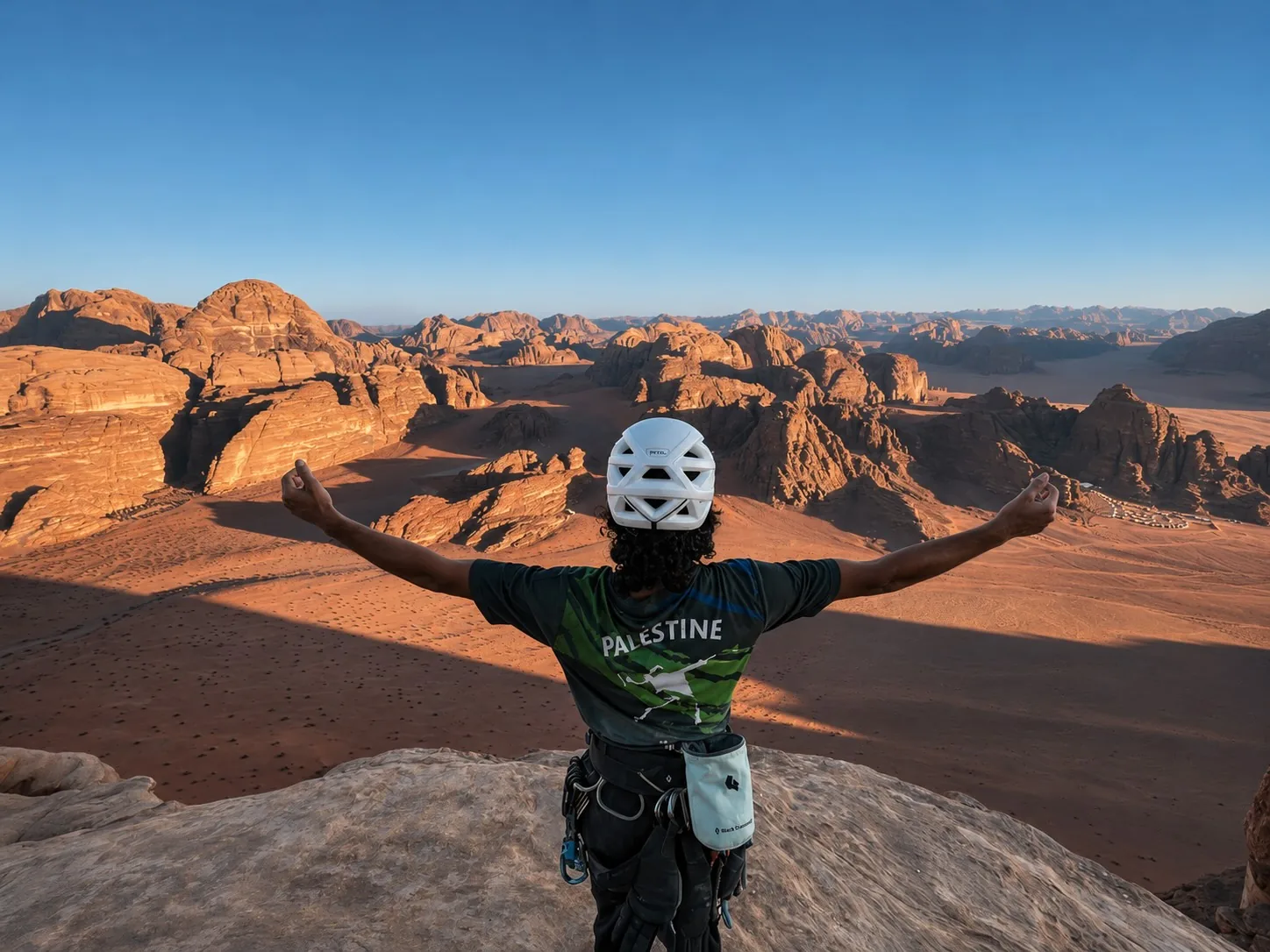
“Tawfiq! Urwah! Come on, come on!” The cheers start on the dune and echo off the canyon walls. On the pink sand, about 15 supporters cluster around Nick Rosen’s camera. Some 1,300 feet above them, two figures cling to the sandstone. Tawfiq Najadeh and Urwah Askar have just reached the crux, the route’s hardest section, rated 5.12b. The wind has picked up. The shadows are getting longer. Soon the sun will drop behind the mountains of Wadi Rum.
A Training Camp With Star Power
Tim Bruns’s binoculars pass from hand to hand. Tawfiq has been hesitating for five minutes. Then he commits to a powerful shoulder move off a crimp—a small hold gripped with bent fingers—and makes it through. Everyone on the dune exhales at once, then the cheers get even louder. Finishing the climb in the fading light could be dangerous. Between them, the two men have climbed only a handful of multi-pitch routes. Three hours later, as the group sits down to dinner, the men have just finished rappelling—descending on ropes—the full 1,300 feet in the dark. Everyone celebrates their return, visibly relieved.
The climb is an impressive athletic feat. It also tells a larger story. It’s November 2026, and a delegation from the Palestinian climbing federation (PCA) is in Wadi Rum, in southern Jordan, at the invitation of Grimpe Solidaire Internationale (GSI). As it did here last year, the French nonprofit is teaching trad climbing—short for traditional climbing—on routes with little or no permanent hardware, where climbers place their own protective gear. Guides, climbing instructors, and rope-access technicians—all volunteers—lead the training.
“I trained at our local cliff in Ein Qinyah, climbing 25 routes in a day. I didn’t have a choice. With the checkpoints and the harassment from settlers and the Israeli army, that one cliff near Ramallah is the only place we can climb.”
Tawfiq, Palestinian climber
A film crew has joined the camp to shoot a sequel to Resistance Climbing, the documentary about the rise of climbing in the West Bank that has won multiple awards. Behind the camera is Nick Rosen, a major name in climbing films. He co-directed Valley Uprising, The Alpinist, about Marc-André Leclerc, as well as an HBO series about Dean Potter. Producing the film is Tim Bruns, the American who installed the anchors on Ein Qinyah’s first climbing routes in 2014. He secured the money from private donors only at the last minute. The crew had just finished a week of filming in the West Bank.
This article is free to read.
That’s possible thanks to donations from our readers.
Without their support, it wouldn’t exist.
If you can, please support Vertige Media.
Access was the main reason for choosing Jordan. According to Tim Bruns, it is one of the few countries Palestinians can still visit without too much difficulty—and without a visa, unlike many other destinations. Since October 7, 2023, West Bank residents have found themselves hemmed in by checkpoints, road closures, Israeli military operations, and settler attacks. Climbing there has become a luxury. Then there is Wadi Rum itself: sandstone towers hundreds of meters tall rising from the sands of the Arabian Desert.
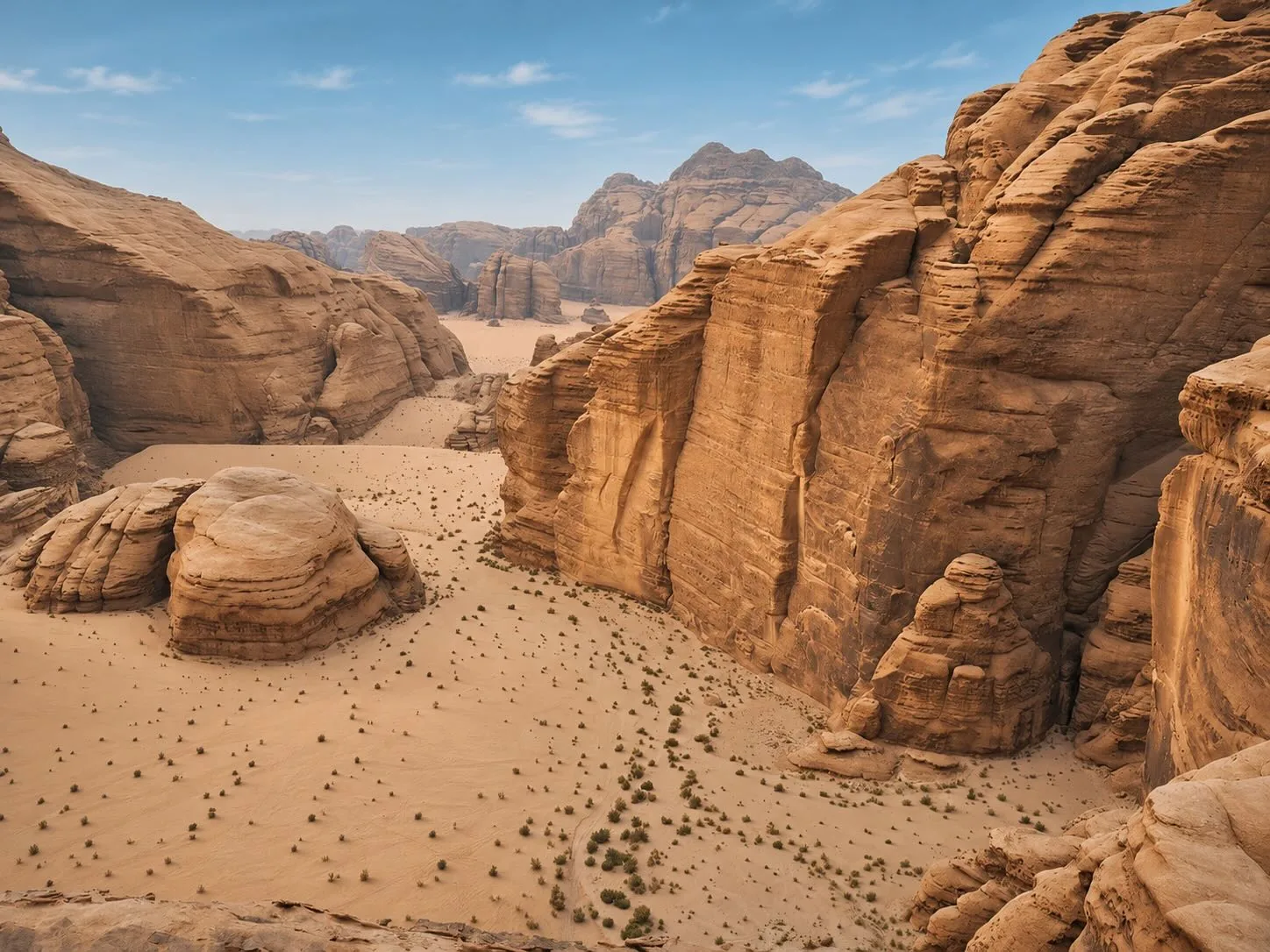
The climb was Tawfiq’s idea. He learned multi-pitch climbing at a GSI clinic in France in the spring of 2025. Until then, he had never trained on a cliff taller than 100 feet. Palestine’s only climbing gym, in Ramallah, has just a small space for bouldering—short climbs without ropes. For a partner, he recruited Urwah, the first Palestinian to climb 5.13b, but with only two multi-pitch routes to his name. “It was an ambitious plan,” Tawfiq admits. “I trained at our local cliff in Ein Qinyah, climbing 25 routes in a day. I didn’t have a choice. With the checkpoints and the harassment from settlers and the Israeli army, that one cliff near Ramallah is the only place we can climb. Most of our climbing areas have been stolen or are off-limits to us.”
The Desert as a Classroom
It all began in Ein Qinyah, a village near Ramallah in the central West Bank. In 2014, Tawfiq was 14 and tending livestock when the sound of a drill drew him to the base of the cliff overlooking his village. Tim Bruns was installing bolts—permanent anchors drilled into the rock. He had moved to the West Bank to help develop climbing and launched Wadi Climbing, a project to establish outdoor routes and build a gym in Ramallah, giving young Palestinians access to the sport. Bruns, who speaks Arabic, invited the boy to try it. Tawfiq came back, then started going to the gym. Today he is the country’s best climber. In 2024, after the Palestinian federation was recognized by World Climbing (the international climbing federation—Ed.), he competed internationally under the Palestinian flag.
The success of Resistance Climbing later took him to the United States and then Europe. His brothers and cousins started climbing, too. Today, Tawfiq’s family, the Najadehs, includes some of the country’s most active climbers and instructors. A few days before the trip to Jordan, about 150 settlers attacked their village under army protection, the climbers say. This time, the attackers were content to frighten the residents. They left with livestock and part of the olive harvest.
“There are probably fewer than 10 women who climb regularly in Palestine. But the biggest obstacle isn’t society. It’s the occupation.”
Tasneem, Palestinian climber
Tawfiq’s climb is only one part of the trip. While the camera follows him and his partner, the other trainees are learning crack climbing, working their way up fissures in the rock. This style of climbing is not found on the West Bank’s limestone cliffs. Tasneem started climbing in 2021 after an outing organized by a club in Ramallah. Now in her 30s, she sees these exchanges as a chance to change careers. “I’d like to earn a master’s degree in a sports-related field so I can work with organizations that use sports as a tool for development in conflict zones, helping refugee or disadvantaged children,” she says. “I came here to learn multi-pitch and trad climbing, because we don’t have either in Palestine.” On the last day of the clinic, she is struggling to remove a cam—a spring-loaded piece of protective gear—from a crack. Her phone rings in her bag. It’s her mother, checking whether she remembered her jacket. “She has a hard time understanding what I do, but she accepts it,” Tasneem says. “It’s unusual for a girl to play sports, especially in conservative communities. There are probably fewer than 10 women who climb regularly in Palestine. But the biggest obstacle isn’t society. It’s the occupation. With checkpoints and roadblocks everywhere, getting around has become a problem.”
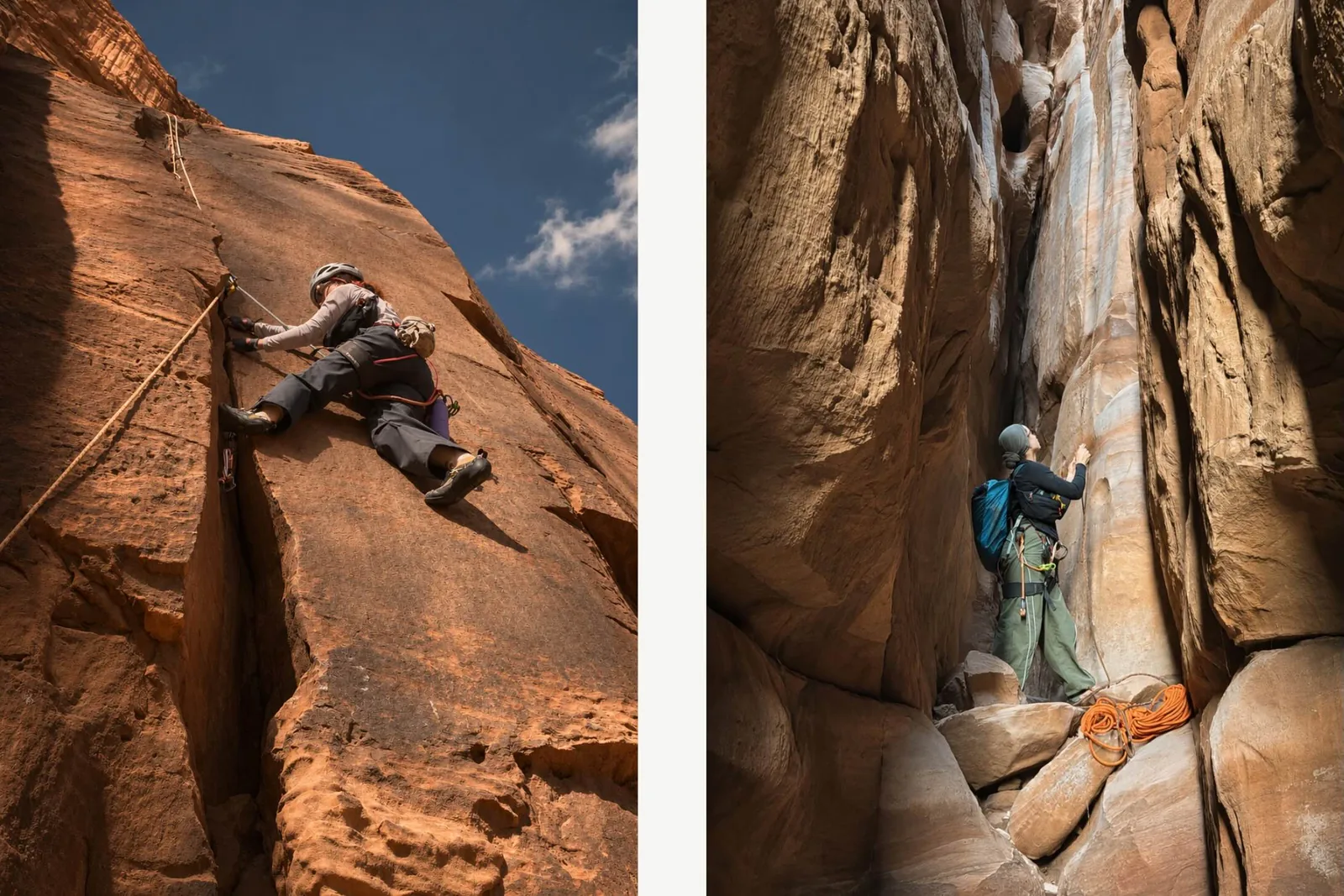
Mohammed almost didn’t make it at all. A father, he wants to introduce young people in Hebron, one of the West Bank’s most volatile cities, to climbing and the outdoors. He has spent time in Israeli prisons for his political activities and says nature helped him rebuild his life. “Young people have started coming out to try it. I need instructor training so I can supervise them,” he explains. A military operation had completely sealed off Hebron for eight days. The roadblocks came down on the day he was scheduled to leave.
In the evenings, everyone gathers at Ahmed’s house in the village of Rum for meals prepared by his wife: Bedouin mansaf made with goat’s milk, zarb cooked in the sand, maqlouba, and kefta.
The Only Cliff Left
Tareq, Tawfiq’s brother, now climbs only at Ein Qinyah, too. “It’s the only place that’s still easy to get to,” he says. “There are cliffs in Bethlehem, Nablus, and Hebron, but they’re hard to reach. Attacks have become more frequent in recent years. With the roadblocks and areas closed off by the army, some spots have become almost impossible to get to. You try to make plans for the week, and you can’t even be sure they’ll happen.” In Wadi Rum, by contrast, “you can come back at any hour, go wherever you want. You’re completely free.”
“Palestine was already in bad shape after decades of occupation, but now it’s completely different. There’s the violence you can see, and then there are things that are harder to explain to an audience abroad. Like the daily humiliation of spending two hours stuck at a checkpoint for a 15-minute trip.”
Tim Bruns, American climber and route developer in Palestine
Tim Bruns, who moved to the West Bank in 2014, has seen the change firsthand. He describes his latest visit as a “strange and suffocating experience.” “Palestine was already in bad shape after decades of occupation, but now it’s completely different,” he says. “There’s the violence you can see, and then there are things that are harder to explain to an audience abroad. Like the daily humiliation of spending two hours stuck at a checkpoint for a 15-minute trip.” According to Bruns, Israel has installed more than 1,000 gates, turning every Palestinian city and village into a prison. During the trip, news reached the group that gates were being installed at the entrance to his friends’ village. Ein Qinyah, the last reasonably safe climbing area, is now under threat as well.
That is the reality the sequel to Resistance Climbing aims to show. “Since the genocide in Gaza began, I’ve felt powerless, like so many people around the world,” Tim Bruns says. “Talking about climbing in that context seemed trivial. But climbing is still a useful way to tell the broader story of Palestine. What has happened to Palestinian climbers and climbing areas reflects a larger history of theft, dispossession, and ethnic cleansing.” The film, shot by volunteers and funded by donations, has neither a release date nor a platform yet. The goal, Bruns says, is for it to be seen by “as many people as possible.”
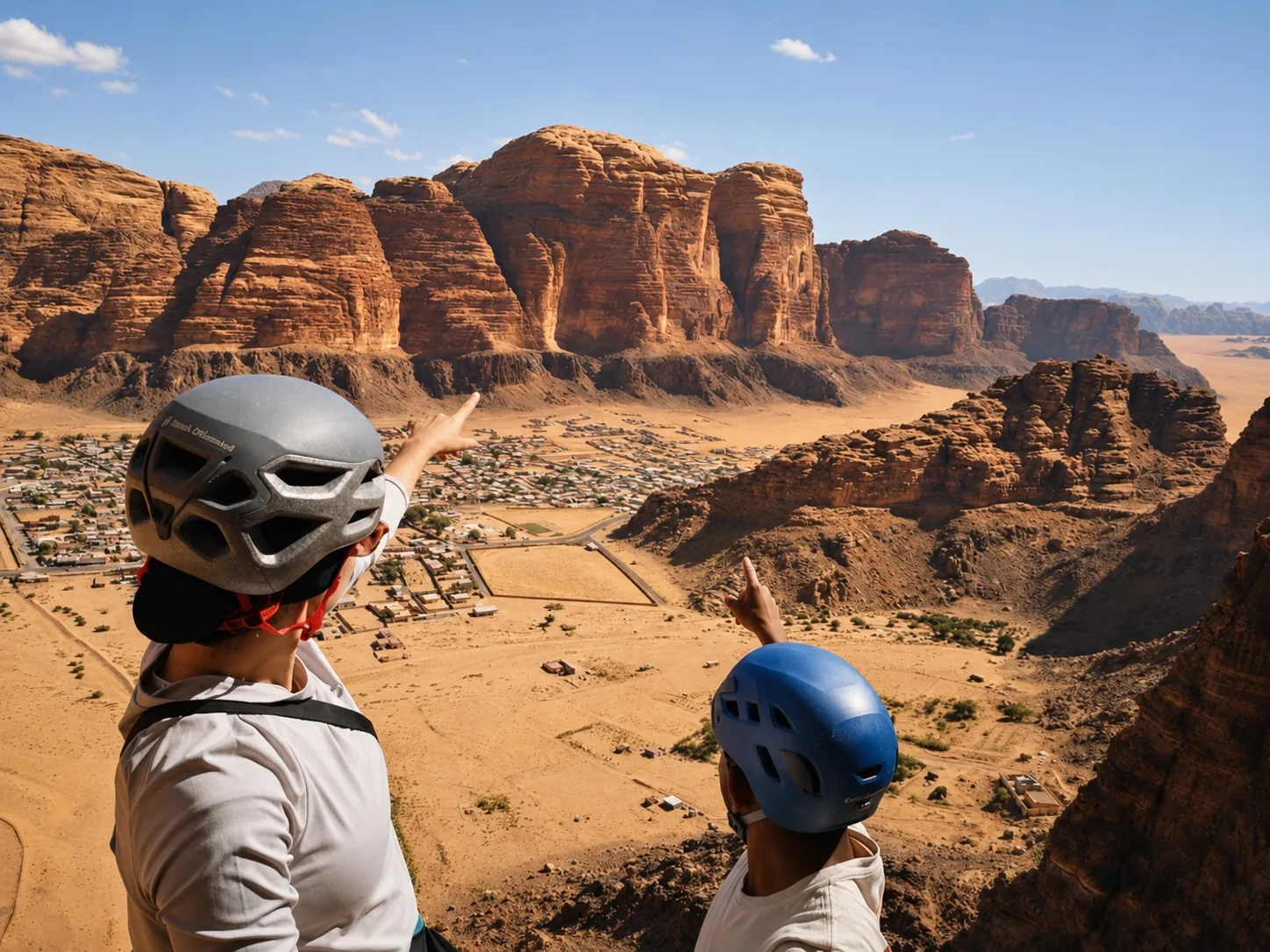
One question remains, one every film made in support of a community needs to ask: Who gets to tell the story? In Wadi Rum, part of the answer involves fixed ropes—ropes anchored in place on the cliff. Anas, a photographer and videographer, has been learning from Xander and Austin, members of the American film crew. “I learned to set up fixed ropes and use them to film on the wall. I’ll be the only person in the region who knows how to do it. That could help the community and introduce people in my city to climbing,” he says hopefully. His main goal, though, is still a climbing milestone: to climb 5.11d or harder. Learning these filming techniques also means being able, one day, to document his own story.
One evening, Tareq recounts his day, visibly proud. For the first time, he has led a group of young Palestinians up a multi-pitch route with no fixed protection, going first and placing the gear for the group. A few minutes later, his family calls. During a nighttime attack, armed settlers threatened to burn everything if residents did not leave their land. The community has organized shifts to stand guard. Tareq heads back to the village to take his turn. His cousin Saqer, one of the country’s most active instructors, goes home with him for the same reason. Since then, Saqer has been arrested by the Israeli army and imprisoned. No one knows when he’ll be home.