
In New York, the city's cheapest climbing gym is closing its doors

Opened in 1992, the climbing gym inside Manhattan Plaza Health Club closed Wednesday after 34 years. With memberships at just $49 a month, it had become an outlier in New York City’s climbing scene.
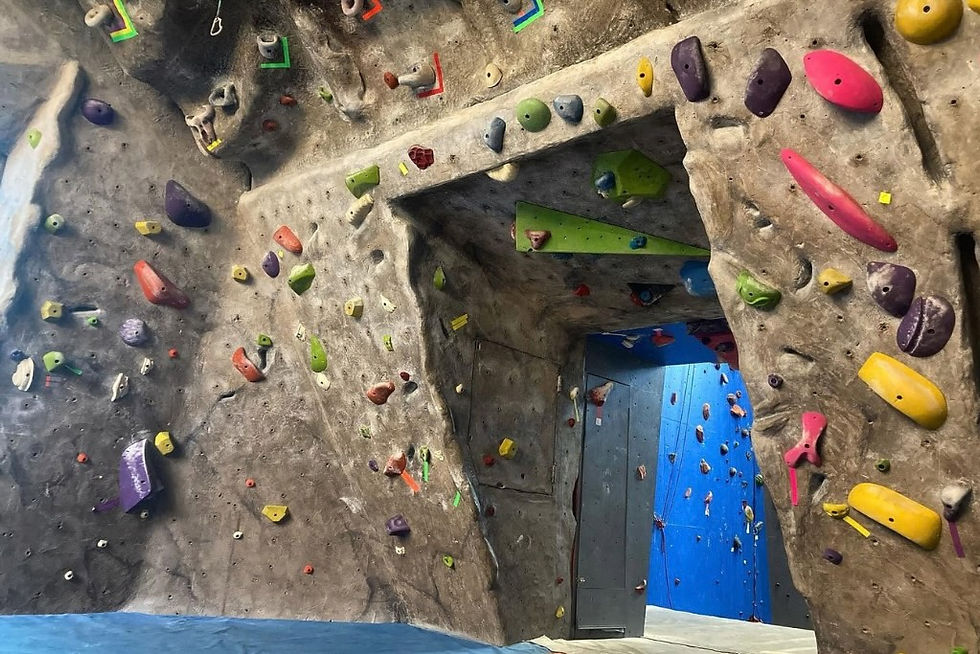
On Wednesday, September 30, the last climbers at Manhattan Plaza Health Club packed up their shoes. Located in Hell’s Kitchen, just a few blocks from Times Square, the climbing gym closed after 34 years. The rest of the health club remains open, including its pool, weight room, group fitness classes, and tennis facilities. But for members with climbing-only plans, memberships were automatically canceled at the end of the month.
$49 a month
The gym opened in 1992 inside a former racquetball court, a sport similar to squash. The roughly 5,000-square-foot space held roped routes, bouldering, and a collection of quirks that had accumulated over the years. Pieces of tape were used to mark holds, some climbs were intentionally left ungraded, and actual pieces of rock had even been bolted to the walls. Curbed, the New York magazine that published a long feature about the gym just days before it closed, described a scrappy, homemade-feeling space far removed from the large, standardized climbing gyms that have since opened across the city.
According to management, the space would have required a complete renovation to keep operating and, even then, would still have been too small to compete with today’s larger climbing gyms
But the gym’s other defining feature was the price: $49 a month, gear included. Climbing shoes, a harness, and chalk all came with the membership. By comparison, an adult membership at VITAL Brooklyn currently costs $155 a month, while Brooklyn Bouldering Project charges $120, with sign-up fees potentially added on top. The offerings are not directly comparable. Those newer gyms include amenities like training areas, yoga and fitness classes and, in some cases, access to multiple locations. Still, in New York City, $49 for unlimited climbing had become almost unheard of.

The place where that price survived was unusual in its own right. Manhattan Plaza is a large residential complex built in the 1970s and known for subsidized housing aimed in part at people working in the performing arts. Even today, artists occupy 70 percent of its 1,689 apartments, with rents subsidized through a federal program. The complex also includes five tennis courts and a fitness center, where the climbing gym had carved out its place.
Inside, the cramped quarters eventually became part of the atmosphere. Rachel Michelson, a gym employee interviewed by Curbed, said headphones were rare. Spend enough time watching someone work the same move or cheering them on from the mats, she explained, and “it’s almost impossible not to make friends.” The gym also ran programs for kids, while beginners could learn how to belay—manage the rope for a climber—or try bouldering, short climbs done without ropes over padded flooring.
Too small
In the end, though, the gym’s size was exactly what management cited as the problem. The closure announcement, posted September 2, gave no reason. But a few hours later, responding to a customer’s negative Google review, Manhattan Plaza Health Club offered more detail. According to management, the space would have required a complete renovation to keep operating and, even then, would still have been too small to compete with today’s larger climbing gyms.
In the final weeks, members organized on WhatsApp, looked for another operator willing to take over the gym, and launched a petition that had collected more than 8,000 signatures three days before closing
The size gap is easy to see. Manhattan Plaza’s roughly 5,000 square feet look tiny next to the latest generation of climbing facilities. Movement Gowanus in Brooklyn, for example, covers nearly 36,000 square feet and offers more than 300 roped routes and boulder problems across three floors. Where Manhattan Plaza had squeezed climbing into every available corner of an old racquetball court, newer gyms have become full-scale athletic facilities.

For some longtime members, that argument is exactly what stings. The same things management saw as outdated were part of what climbers valued about the place: limited space, few extra amenities, and a membership price far below the local norm. In the final weeks, members organized on WhatsApp, looked for another operator willing to take over the gym, and launched a petition that had collected more than 8,000 signatures three days before closing. A farewell party on September 25 even brought back people whom gym manager Ryan Shaefer said he had not seen in 14 years.
Another piece of information added fuel to the campaign. Several employees told Curbed that the neighboring tennis club could take over the space and install a simulator. On Reddit, one member said it could cost $200 an hour. The contrast with a $49-a-month climbing membership quickly spread online, but neither Manhattan Plaza Health Club nor Related Companies has publicly confirmed the conversion or the reported price. The real estate company does note that Manhattan Plaza already has five tennis courts.
The climbing wall, meanwhile, did close on September 30. Manhattan Plaza Health Club now continues to promote its pool, group fitness classes, and fitness facilities on its website. Until just a few days ago, the climbing page was still advertising the old price: “only $49 per month.”


