
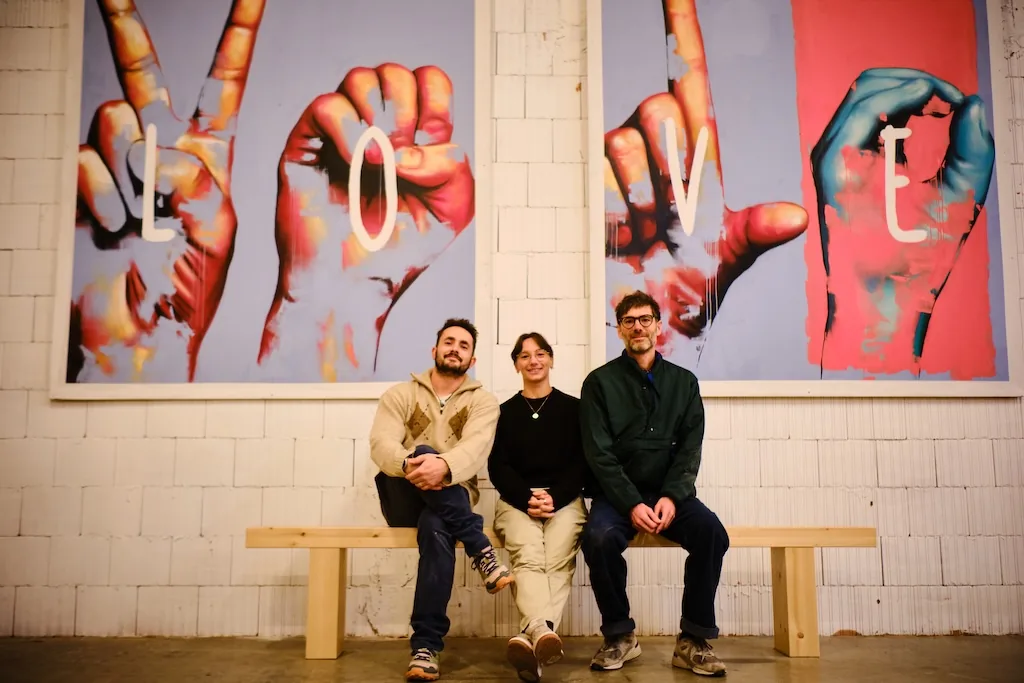
Vertige Media: It’s been almost 20 months since our first interview. What’s changed the most at Unibloc?
Robin Leduc: The gym has changed a lot, mainly because I’m now running it on my own after my business partner left. Management, logistics, purchasing, whatever comes up—it all falls on me now. It takes a lot of sacrifice, but I’ve also learned to keep a close eye on the books. We had a good year in 2025, averaging about €27,000 in monthly revenue. We even managed to pay ourselves for most of the year. But we’d miscalculated the break-even point: It was actually closer to €22,000 or €23,000 a month without paying the owners, and €25,000 or €26,000 if we paid ourselves. So the second year is crucial to figuring out whether the business model really works.
Vertige Media: Where do things stand financially today?
Robin Leduc: Our second year is off to a weaker start than our first, partly because we haven’t seen the same peaks in business in the spring and summer. A gym’s business depends heavily on the weather. Two weeks of nice weather during the April school break in Carcassonne can mean almost €10,000 in lost revenue: Families go to the skatepark or find something else to do outside.
Our business model relies mainly on single visits and birthday parties, which account for about 60% of revenue. Memberships and multi-visit passes account for 20%, climbing classes for 10%, and the bar for 10%. That means we depend heavily on occasional visitors, even though enrollment in our climbing program grew from 90 to 125 students in 2026. That’s encouraging: New people are discovering climbing and sticking with it. I’ve also cut expenses. I’m no longer paying myself, and we still have loan payments of about €4,500 a month for another five or six years. There was also a €25,000 debt for the air conditioning. Since the school year started, cash hasn’t been quite so tight, and I can start paying off that debt. But we still need a few more months before we can fully assess our second year.
“I don’t necessarily think people are climbing less. I think it’s mostly that there are more gyms now.”
Robin Leduc, owner of Unibloc, an independent climbing gym
Vertige Media: The industry is going through a rough stretch: Climb Up is in court-supervised restructuring, Block’Out has been acquired by Arkose, and several independent gyms have closed. What do you make of all this?
Robin Leduc: Here in Carcassonne, we’re not directly seeing a decline in climbing participation, because we’re still the only gym here and the sport is still growing. But Aude is a poor part of France, and people’s budgets are really stretched. You get the sense that family outings and spending in general are harder to afford, but I can’t say that with 100% certainty yet. I need a few more months before I can make a solid comparison. As for the big chains, sometimes I feel like they’ve destroyed themselves. I never understood the frenzy of gym openings, backed by investment funds, with multiple locations in the same cities. Even in a strong economy, I’m not sure that model makes sense.
The newsletter that lifts you higher
Every Wednesday: the editorial team’s column, the best articles, and plenty of surprises to help you climb higher — in mind and in spirit.
Vertige Media: What do you think explains their problems?
Robin Leduc: I don’t necessarily think people are climbing less. I think it’s mostly that there are more gyms now. If a gym gets 200 people a day and another one opens 15 minutes away, it makes sense that they’d end up splitting that business. Climbers don’t “stay faithful” to one gym. They want to try new climbs, and they’ll happily go to several gyms if they’re all within 15 minutes of home.
Vertige Media: These struggles have also led to employee protests and strikes at the big chains. As an independent owner, what do you think of the workers’ demands?
Robin Leduc: I understand where they’re coming from. My impression is that these companies’ business models depend on high turnover and keeping payroll as low as possible. When a lot of money is invested in a chain, the people working in the gyms are the first to bear the consequences of the push for profits.
“I keep reading that people see it as ‘just a job to pay the bills.’ But being a supermarket cashier is also a job that pays the bills. And to me, working the front desk at a climbing gym is still cooler than being a cashier at Monoprix.”
Robin Leduc, owner of Unibloc, an independent climbing gym
At Unibloc, there are two or three of us, tops. I’m with my team every day, while the manager of a big gym might have 15 or 20 employees and not see all of them daily. It’s a different working relationship. Here, there’s very little hierarchy and a lot of flexibility: If someone stays late, they can take that time off the next day—all it takes is a text. That requires independence and accountability, but we don’t manage everything strictly by the rulebook.
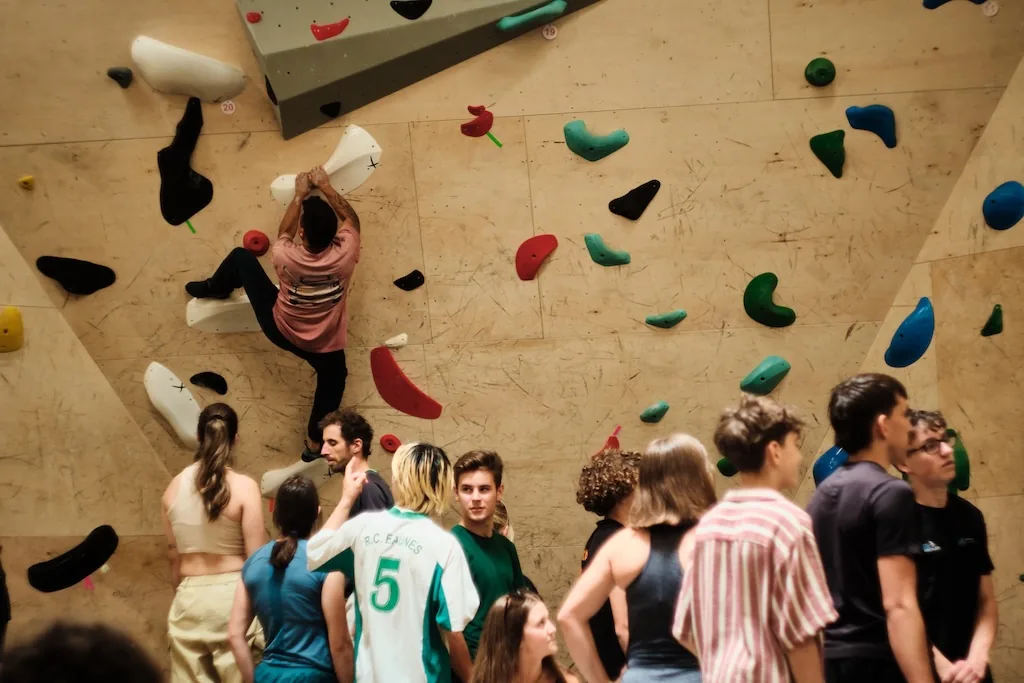
Vertige Media: Doesn’t that flexibility risk blurring the lines between loving what you do, being available, and being on the clock?
Robin Leduc: That’s a fair question. I worked in music for 25 years, and in that world you don’t count your hours. If you’re inspired in the studio, you keep going. An album might take an extra month—that’s on you. There’s this idea that you have to fight to make the project happen. But I also understand that you can’t ask that of everyone, especially employees. I’m not saying people should put up with anything just because they’re passionate about the work. I’m only saying that in a small gym like ours, the job involves a lot of different tasks, and it’s not always easy to draw clear lines between them: working the front desk, talking with customers, maintenance, routesetting—arranging the holds for new climbs—and teaching classes. You have to strike a balance between structure and flexibility. What bothers me about the news from the big chains and the media’s focus on worker protests is that it’s given working at a climbing gym a bad name. Working at Arkose and working here are very different experiences. I keep reading that people see it as “just a job to pay the bills.” But being a supermarket cashier is also a job that pays the bills. And to me, working the front desk at a climbing gym is still cooler than being a cashier at Monoprix.
Vertige Media: You said you’ve stopped paying yourself to keep the gym going. What does it mean to run an independent climbing gym under those conditions?
Robin Leduc: It takes a lot of sacrifice, a lot of putting yourself last. I left Paris to be closer to my wife and son, thinking I’d gradually be able to slow down. Right now, I work pretty much all the time, seven days a week. I spent a year with a frozen shoulder and couldn’t climb, but I still came in to haul wheelbarrows of holds around for cleaning. Basically, I’m involved in everything, doing whatever needs to be done. Some days I wonder if I can keep this up, but I don’t really have a choice: There’s a loan to repay and other financial commitments to meet. I’m giving everything I have to keep the gym going, hoping it will eventually give me a comfortable living. But I’m also doing it to make sure my employees get paid.
“I don’t want to downplay the challenges, but there’s still a good energy here. Seeing people happy, watching the gym grow, and getting to bring arts and culture into a gym—that’s what keeps me motivated.”
Robin Leduc, owner of Unibloc, an independent climbing gym
Vertige Media: We hear that a lot from business owners, and that perspective can come with biases. So there’s also the question of whether this model is viable. What keeps you going?
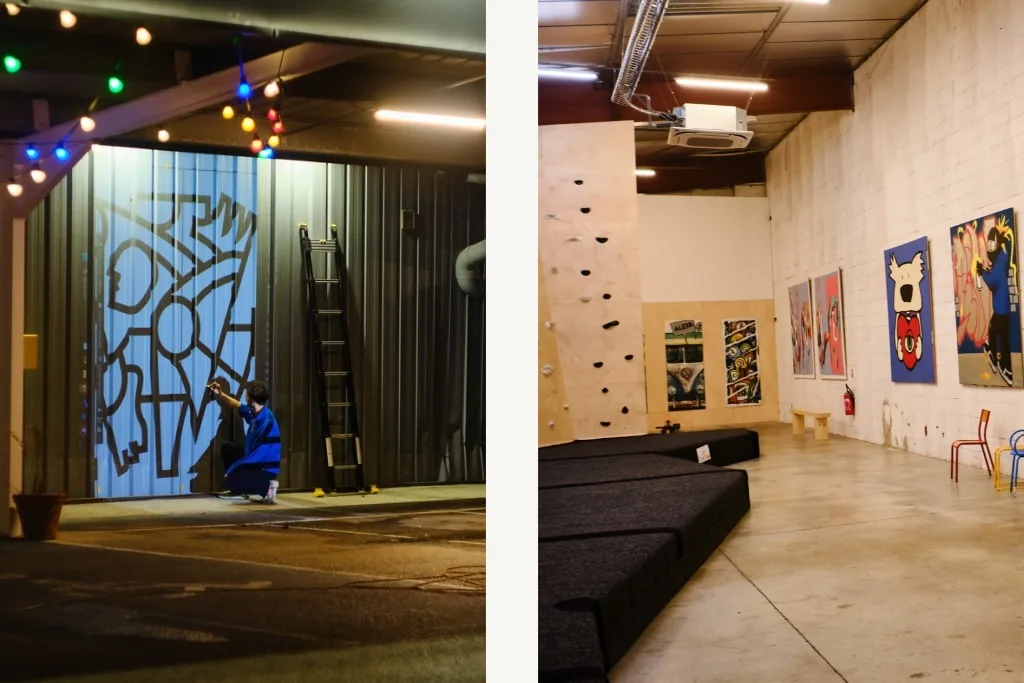
Robin Leduc: I don’t want to downplay the challenges, but there’s still a good energy here. Seeing people happy, watching the gym grow, and getting to bring arts and culture into a gym—that’s what keeps me motivated. We also have a core group of volunteers who help with events and sometimes with setting routes. It’s part of why Unibloc almost feels like a community nonprofit. We’ve worked with the local community, recreation centers, and organizations serving people with disabilities. We put on Block Party, with a climbing competition, an art exhibition, live mural painting, DJs, and a day for students. It’s not just a business strategy. It’s the kind of place I want this to be.
Vertige Media: How has the far-right city government elected in 2026 affected what you’re doing at Unibloc?
Robin Leduc: In practical terms, not much has changed so far. For example, when we ask for display panels for an event, the city provides them. But I do feel a new kind of fear. I don’t feel as comfortable speaking my mind. I don’t yet know whether that will have an economic impact. Aude’s problems go back much further than this city government. Unibloc needs to stay inclusive and open to everyone, not become a partisan space. The deputy mayors responsible for sports and culture visited the gym and praised what we’re doing, while L’Indépendant, which the mayor considers a “far-left newspaper”, put Block Party on its front page. It shows that a place can still bring together people who don’t share the same politics.
Vertige Media: As the owner, what’s your plan to make sure Unibloc is still around in five years?
Robin Leduc: Keep working with the local community, keep our climbing program strong, and set new routes regularly. Those are the things that bring people back. We also have to be careful: We have room to build more climbing walls, but right now that would mean too much investment and too much risk. We’re considering a training area, but only if the cost makes sense. Then there are the projects that make the gym unique: An artist from Block Party is painting a mural in the birthday party room right now. It makes the place more welcoming, for our customers and for us. For me, the future means being able to give my employees raises and finally pay myself. That’s what it comes down to.