
Thirty Years In, Still Standing: How an Independent Climbing Gym Survived the Sport’s Transformation

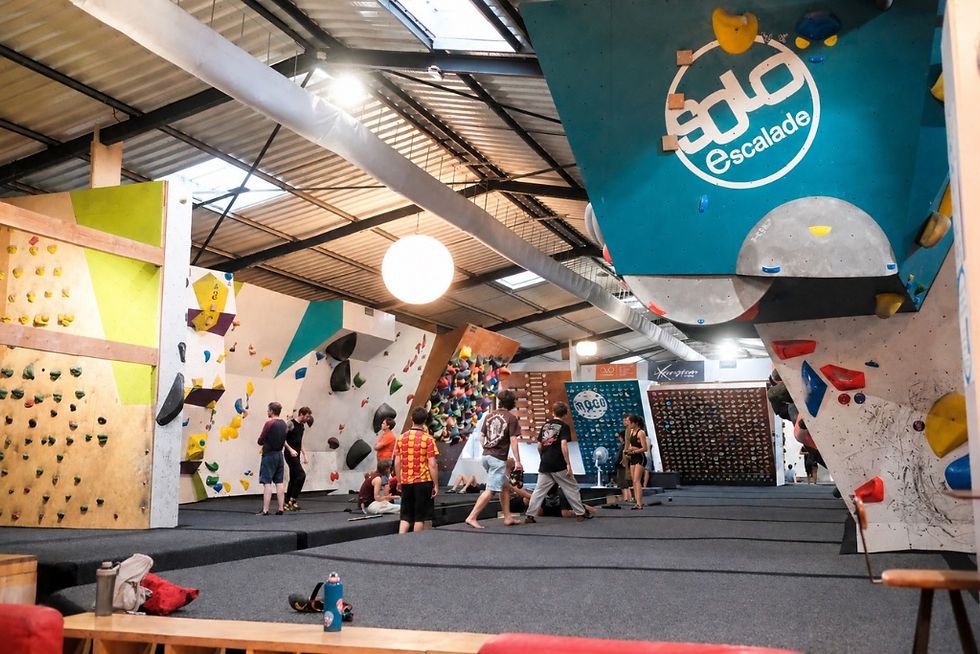
In 1996, Pierre Serin opened a bouldering gym in Toulouse, in southwestern France, that looked more like a cave than one of today’s polished climbing facilities. Thirty years later, the founder and manager of Solo Escalade has kept pace with a sport that has changed dramatically around him. We spoke with him about climbing’s move into the mainstream, the economics of running a gym, and the choices that have kept his independent business alive.
Vertige Media: How did you get into climbing?
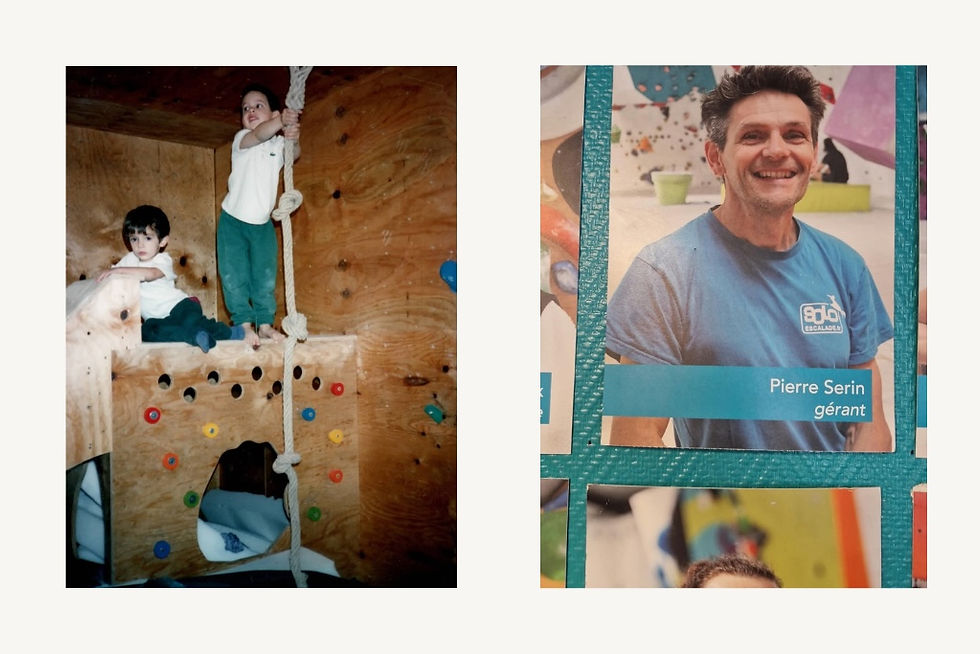
Pierre Serin: I’m a PE teacher, so I was already interested in climbing. I had spent time at a mountain-training center in the Pyrenees and done mountaineering in the military. In Toulouse, I used to climb on the brick walls along the Garonne River. In 1996, I met a group in Ariège, in the Pyrenees south of Toulouse, and they asked me to join their project: opening a climbing gym. At first, it looked more like a cave. It was basically a big house we had converted, with a bar and a workshop. It smelled like glue, there was dust everywhere, and almost no ventilation. At the time, there were only three or four climbing gyms in all of France.
Vertige Media: Who came to the gym?
Pierre Serin: We had mountaineers, beginners, and people training to become climbing instructors, but it was still very niche. We repaired gear, made climbing holds, and sold them to local clubs. We had learned how to resole climbing shoes in Avignon, and we also repaired shoes and bags for Decathlon, the big French sporting-goods retailer. Their products broke all the time, so there was plenty of work. That volume kept us going for a while. We worked day and night. We managed to pay ourselves a small salary each month, but the lifestyle was pretty unusual. We slept at the gym. I can tell you, a lot of relationships didn’t survive it.
Vertige Media: How was climbing viewed back then?
Pierre Serin: As dangerous. Even in my own family, people thought it was a little crazy to take those kinds of risks. When we climbed outside, relatives didn’t always understand all the stuff with ropes and belaying, the system climbers use to protect each other from a fall.
But parents could see that their kids wanted to climb everything. It comes naturally to them. And a bouldering gym—short walls climbed without ropes, with thick pads underneath—felt reassuring. At least they knew their kid probably wasn’t going to get hurt. That’s really where our first customer base came from: families. And families are still a huge part of our business today.
We eventually moved the gym to L’Union, a suburb of Toulouse. We did everything ourselves: the walls, plumbing, masonry, framing. I was pretty handy, and doing the work ourselves saved us a lot of money. Once we opened, we handed out flyers outside schools, and before long we had 300 students a week. It became the largest climbing school in southwestern France.

Vertige Media: When did the gym become a destination in its own right, rather than just a place to train for outdoor climbing?
Pierre Serin: The first generation of kids grew up and kept climbing indoors. Going outside takes time, costs money, and usually means driving somewhere. At the gym, you can meet up with your friends easily. These days, outdoor climbing tends to be something people save for longer trips. Kids started treating climbing the way they would soccer or rugby. It became an urban recreational sport.
“The business works because of classes, families, weekends, and birthday parties, with memberships on top of that.”
By the early 2000s, I could see that climbing was becoming much less niche. Outdoor climbing was no longer the center of everything, and bouldering had become an urban playground.
The real boom, to me, started about 15 years ago, before climbing made it into the Olympics. At that point, we were growing 15 to 20 percent a year. Kids and birthday parties were a huge part of it. We were hosting four to six birthday parties every weekend. Kids would come back with their friends, then bring their parents. They were the ones telling them, “Try it. You’ll see, it’s fun.”
Vertige Media: What actually drives your gym financially today?
Pierre Serin: Families and kids. Dedicated climbers alone aren’t enough. The business works because of classes, families, weekends, and birthday parties, with memberships on top of that. Our instructors were versatile from the beginning. They worked the front desk, set problems—designing the climbs on the walls—cleaned the gym, and taught classes. We quickly had 10 or 12 employees at L’Union, unlike some gyms that operated with just a handful of volunteer climbers. Some operators in Toulouse initially focused on high-level climbers before realizing they needed to offer classes. But every gym has to find its own audience.
Vertige Media: What was it like watching the big gym chains arrive and the number of climbing gyms multiply?
Pierre Serin: I was worried. I had built my gym myself, so parts of it could look dated. The new gyms were more polished, and people often told us ours was dirty. Of course I wondered whether they were going to take our customers. I’m not obsessed with being the best, but I’ve always had a competitive side. I did track and field, and in that sport you’re competing against yourself. You may not finish first, but you still want to stay in the race. When the big chains arrived, we pushed ourselves even harder. And we kept growing by more than 20 percent.
“Solo has always been profitable until this year, when we expect to finish about 7 percent in the red.”
Vertige Media: What allowed Solo to stay competitive?
Pierre Serin: We kept investing. I regularly replace the volumes, the large geometric features attached to the walls, refurbish the holds, and redo the mats. I still build and fix things myself. I’m constantly thinking about how to improve the place, and when we make a decision as a team, we try to do the work ourselves first. It hasn’t made us incredibly rich, but it has allowed us to keep going. Solo has always been profitable until this year, when we expect to finish about 7 percent in the red. We have 18 permanent employees, including quite a few younger people working part time. Before Covid, I thought we were going to break €1 million in annual revenue. Today we’re at around €900,000. Things have become much less predictable. With purchasing power falling, people are watching their spending and coming more often during off-peak hours to save money. The economic situation is genuinely difficult. People are going to have to think carefully about how they vote in France’s 2027 presidential election.
Vertige Media: Today, two models seem to be competing: the chain model, built around growth, and your more hands-on approach. What separates them?
Pierre Serin: I’ve seen the chain model from the inside. I was a business partner of François Petit (Editor's note: former world climbing champion and founder of the Climb Up network of climbing gyms) before getting out of that arrangement pretty quickly. My feeling is that behind the message of “we’re doing this for climbing,” the main goal is to make money and open locations everywhere. Under that model, some flagship gyms make a lot of money, but you also have to keep expanding. And with rents, construction costs, rising energy prices, and economic uncertainty, that model is extremely risky. It’s the startup model: you put in a lot of money, accept that you won’t be profitable right away, and hope for a payoff later.
I chose a more hands-on model. We work with what we have, but we also remain in control of our own decisions.
“Maybe the ideal gym will mix climbing and parkour, with movement that’s very approachable. We need to keep making the sport accessible and always pay attention to the person who is walking into a climbing gym for the first time.”
Vertige Media: Is that also why you reject franchising?
Pierre Serin: Do not franchise. Seriously. That may be the best advice I can give anyone who wants to open a gym. With a franchise, someone else dictates your communications, your sales strategy, the way you welcome customers, and the way you sell punch passes or memberships. You’re no longer in control of what happens inside your own gym. I don’t want to pressure people to spend money. If they come climbing, the first reason should be because they enjoy it. I also think you need to be physically present. If you open a gym far from where you live and put someone else in charge, you stop seeing what’s actually happening. You can’t keep pushing your own ideas forward. You stop noticing the problems too, and then suddenly there’s a crisis or a strike you didn’t see coming. When you’re there every day, you can respond immediately.
Vertige Media: You’ve sold shares in the company to some of your employees. Is that team making you think about a different kind of growth?
Pierre Serin: Yes. Instead of building another huge gym in Toulouse, we look at rental prices and think maybe we need a different approach.
We’re considering small neighborhood gyms with very little staff, low rent, and affordable prices. That model already exists in Japan. You could imagine a place that operates partly on its own, with events or social nights from time to time to keep the community aspect alive.
“When you’re constantly exposed to people cutting corners and looking out only for themselves, eventually you start wondering why you shouldn’t do the same. That isn’t the spirit of climbing.”
Vertige Media: If smaller gyms are part of the future, what do you think needs to be preserved in the way gyms introduce people to climbing?
Pierre Serin: I don’t think a climbing gym should be reduced to competition climbing or designed around strong climbers. Route setters need to understand that families and kids are what keep our business alive. And the best setters understand that.
If you give beginners boulders they can’t even figure out how to start, you lose them. You need movement that looks good, feels playful, and is accessible enough to make people want to come back.
Maybe the ideal gym will mix climbing and parkour, with movement that’s very approachable. We need to keep making the sport accessible and always pay attention to the person who is walking into a climbing gym for the first time.

Vertige Media: You said, “People are going to have to think carefully about how they vote in 2027.” What does politics have to do with running your business?
Pierre Serin: I don’t want to campaign for anyone, but running a business has taught me a few things that are pretty easy to calculate. If wages went up tomorrow, people would have more purchasing power and would start coming back to climbing gyms more often. A small company like mine can’t raise wages by 10 or 15 percent on its own. Large companies, their shareholders, and the government would need to contribute more. If people have more purchasing power, we can also pay employees better, and the community as a whole can become more supportive of one another.
When you’re constantly exposed to people cutting corners and looking out only for themselves, eventually you start wondering why you shouldn’t do the same. That isn’t the spirit of climbing. If the far right comes to power, we’ll start watching one another. At the front desk, I won’t know who I can talk to or whether I can speak freely. People could also be attacked because they belong to the LGBT community. To me, that would be a terrible world.


