
When Does a Boulder Problem Become “Morpho”?

Why do some boulder problems become “morpho”—meaning strongly dependent on a climber’s body dimensions? From perception science to Olympic routesetting, one concept helps explain how the exact same wall can offer very different possibilities depending on the body climbing it.
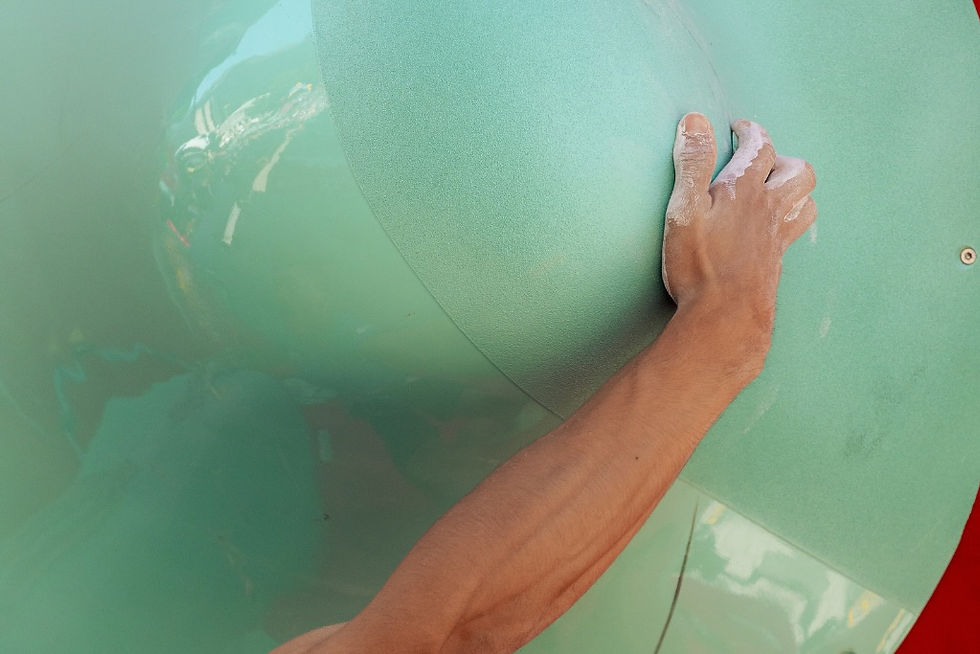
Two holds are about 31 inches (80 centimeters) apart. One climber can make the move statically, staying in control the whole way. Another has to go dynamic. A third may not be able to make the move at all. Strength, mobility, technique, and body proportions all help determine what is actually possible on the same set of holds. Perception science has a word for this relationship: affordance.
The Climber Changes the Move
The term comes from American psychologist James J. Gibson. In The Ecological Approach to Visual Perception, published in 1979, he developed his theory of affordances: the possibilities for action that an environment offers an organism capable of carrying them out. A step can be climbed, an opening passed through, an object picked up. But that possibility never depends on the environment or the body alone. It comes from the relationship between the two.
“Being six inches taller does not automatically make someone a better climber.”
In climbing, then, a hold cannot simply be classified as “within reach” or “too far away.” Ludovic Seifert and his colleagues tested this with expert climbers, asking them first to touch a hold, then grab it, then continue climbing from it. When the task was simply touching or grabbing the hold, wingspan was still a fairly good predictor of how far someone could reach. But once the climbers had to link several actions together, their actual climbing abilities became a better predictor of what they could do.
Researchers call these “nested affordances.” A hold can be within reach without being truly usable. A climber might be able to touch it but not grab it, grab it but be unable to move the other hand, or hold it from a position that leaves no workable next move. Reaching a hold and being able to climb from it are two different things. Distance is real, but it tells only part of the story.
Speed climbing provides an almost ideal example because the wall is standardized. Same angle, same holds, same distances. Yet an analysis published in 2023 found differences in the methods used by women and men at the Tokyo Olympics. In the sample studied, the women averaged 5'4" (1.63 meters), compared with roughly 5'10" (1.77 meters) for the men, and they used certain lateral positions and hip rotations more often. The authors linked some of those adaptations to the fact that the same distances represented a larger proportion of the women’s body height. The wall was identical. The possibilities it offered were not quite the same.
No Single Body Type Wins
A boulder problem is like a fixed landscape. Once the holds are bolted on, its geometry does not change. It allows certain positions, balances, and movements. But that range of possibilities is not the same for everyone who climbs it. Longer reach can make a direct move possible. More mobility can keep a foot on. Smaller hands may grip a pinch differently. More power can eliminate an entire sequence.
“International guidelines therefore call on setters to consider competitors’ minimum and maximum reach, as well as weight, overall build, and finger size.”
None of that gives one body type a permanent advantage. A review of 74 studies on the factors that determine climbing performance found inconsistent results for anthropometric characteristics, while climbing-specific strength, endurance, and power distinguished ability levels much more clearly. Being six inches taller does not automatically make someone a better climber. On one particular move, though, those extra inches can turn an all-out dynamic move into a static one.
That means “morpho” can describe several very different situations. A move may simply be easier for certain bodies. Other climbers may be forced to use different beta—the sequence or method used to solve a climb. Or the setup may leave no viable solution at all beyond certain body dimensions. Treating all three as the same thing quickly muddies the discussion.
The Ai Mori Case
Research on routesetting is still relatively new. In 2024, Julian Henz, Xavier Sanchez, Daniel Memmert, and Jerry Medernach surveyed 78 expert routesetters about the core skills their work requires. Among the most important were a broad movement repertoire, the ability to anticipate the movements a particular configuration will produce, and the ability to imagine several possible strategies for the same boulder problem.
Setting is not simply a matter of inventing a sequence that everyone else must reproduce. Holds encourage certain actions, rule out others, and can leave several paths to the same result. During forerunning—the phase when the setting team tests the problems before competition—a move intended to be dynamic may turn out to be static for someone else. A foothold considered essential may disappear entirely from another climber’s beta. Or a sequence may prove nearly impossible for athletes of a certain size. International guidelines therefore call on setters to consider competitors’ minimum and maximum reach, as well as weight, overall build, and finger size.
At the Paris Olympics, the issue became concrete on the very first problem of the women’s combined final. Japan’s Ai Mori, who is about 5'1" (1.54 meters), was never able to establish the start position. She could touch the holds, but she could not generate the dynamic movement needed to grab them and control the resulting swing. She scored zero on the problem. Later, she completed the third problem and posted the highest lead score of the final, ultimately finishing fourth overall.
After the Games, Olympic routesetter Olga Niemiec explained that the team had spent a great deal of time checking differences in reach among the athletes. The start had even been modified because an earlier version appeared more dependent on body dimensions. The final version had been tested by a smaller routesetter, and the team believed Mori would be able to do it.
So the episode does not fit neatly into either easy verdict: “the problem was too morpho” or “she just needed to jump better.” The height difference had been identified, and the move had been adjusted. What the team misjudged was how that particular setup would interact with the abilities of one particular athlete.
Ai Mori could reach the holds. Under those conditions, she could not use them.
That distinction is useful when talking about morpho problems. Two bodies finding two different solutions is not necessarily a problem. A shorter climber may go dynamic where a taller climber stays static. A highly mobile climber may use a position that someone else replaces with more power. That variety is part of climbing.
The more meaningful threshold comes when a physical characteristic no longer changes only how someone solves the problem, but determines whether a solution is available at all. In other words, when there is no longer another way to compensate.
For routesetters, then, the goal is not to eliminate the influence of body shape and size. That would be impossible. The better question is what remains possible when the body changes. Can another technique replace the one that is no longer available? Can a different body position get around the constraint? Or does the move ultimately become a direct test of arm length, hand size, or joint mobility?
No boulder problem can erase the differences between bodies. But routesetting can determine how much room climbers have to work around them.


