
Archiving the Relief: A Vertical Dancer Staring Down Collapse

When the Alps start crumbling, some people pour concrete. Others take the loss seriously—and try to save what can still be saved. Aster Verrier, an artist and climber, has chosen a third option: he records the fleeting gestures of climbers and turns them into a kind of poetic archive. Part sensitive report, part quiet stand against forgetting, his work gives shape again to a mountain heritage that’s changing fast.

It starts with movement. The movement of rock that cracks, glaciers that melt, ridgelines that shrink. When an alpine landscape is shifting this hard, what can a climber do—besides try to preserve something from terrain that may not be there much longer? Verrier’s answer is both conceptual and strangely simple: he archives climbers’ motions—an invisible choreography from a sport that depends on natural features that can, quite literally, disappear.
In a project that sits somewhere between climbing, contemporary art, and the close study of human movement, Verrier isn’t chasing raw performance—the frantic race for harder grades and cleaner sends. He’s drawn to the quiet stuff: the barely noticeable adjustments, the private beauty of a move that doesn’t need an audience. We met with the guy who’s turned archiving into a form of commitment—and climbing into a kind of watchful, patient dance.
The delicate art of climbing differently
In Saint-Gervais-les-Bains—a tidy, well-heeled alpine town where climbing can sometimes feel like a social trophy—Verrier needed a form of art that was subtle but a little provocative, just to poke at local assumptions about what climbing is. In a valley where “alpine performance” often gets translated into status, he sets up a counterpoint: no heroes in Arc’teryx puffies, no spotlight. Just anonymous silhouettes, stripped down to the essential thing—the movement.
“I wanted to get away from the clichés of performance climbing and go back to what’s universal and intimate about it: the gesture,” he tells us. So he went out and met local climbers—everyone from seasoned vets to total unknowns—then followed and filmed them with a GoPro mounted on a helmet. The point wasn’t to freeze a grade or document difficulty. It was to catch an emotion.
“Some movements aren’t spectacular at all,” he says, without any defensiveness. “But their value shows up in what they mean to the climbers themselves.”
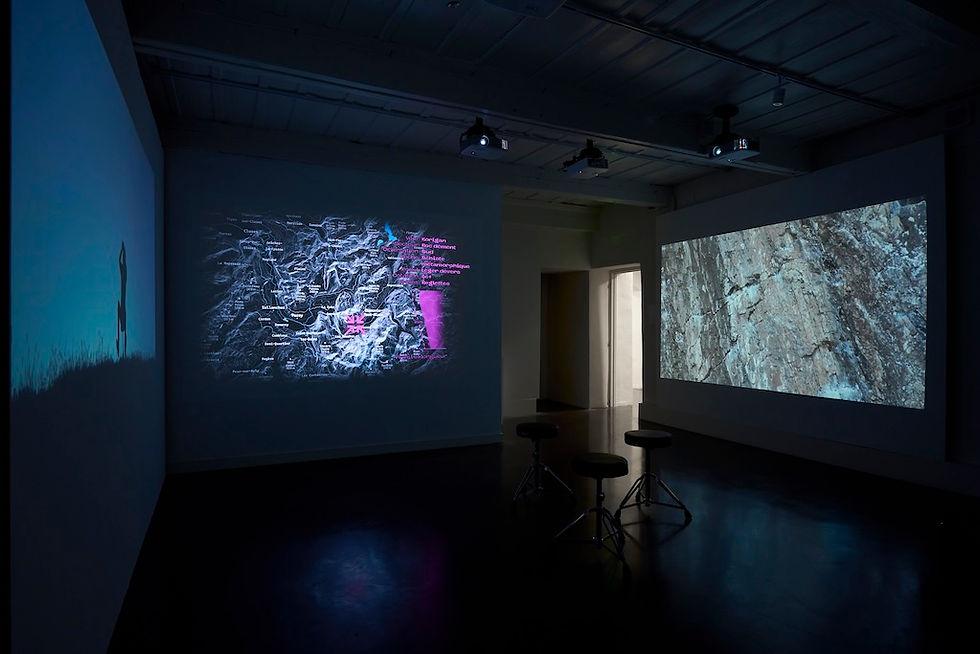
It’s an approach that feels almost anthropological—careful, precise, and heady in the best way—and it cuts against the dominant sports-and-spectacle version of climbing. The question stops being “Who climbed the hardest?” and becomes: what does it look like when a body has a private conversation with rock?
From competition to contemplation: a sharp turn
Verrier didn’t come to this by accident. He used to compete, trained in the strict world of high-level climbing, and still carries a complicated relationship with sport climbing. But he ultimately leaned toward art—“because climbing every day at 3 p.m. didn’t work with class schedules,” he says, bluntly. The choice stuck.
Then came the Netherlands. Living somewhere with almost no real relief—no peaks, no big walls—did something unexpected: it sharpened his attention to verticality. From that flatness, he first imagined a dystopia where climate disruption had erased the mountains altogether. The project began as fiction.
Back in the Alps, it stopped feeling fictional. He realized the dystopia was showing up in real time. “The disappearance of iconic features like the Drus pillar isn’t some futuristic fantasy,” he says. “It’s happening right in front of us.”
So his response became aesthetic and political: build a memory of something that won’t hold still. The archive, for him, is a subtle but total answer to the same blunt problem—the landscape is being wiped away.
An archive you can feel—for a heritage you can’t always see
But how do you preserve a route’s memory when the rock itself may not survive? For Verrier, the answer isn’t the usual climbing-trip imagery, and it isn’t worshiping athletic feats. “What I’m archiving is an emotion,” he says, “not the raw difficulty, but the deeper meaning a movement can carry for the person doing it.”
That’s why his choice of routes is deliberately eclectic. One climber, for example, picks a line that might look “average” on paper—but it matters to her because it brings her back to her years as a caver. Archiving that—that particular set of movements, tied to that personal history—is a way of preserving an intimate record that mainstream climbing media rarely touches.
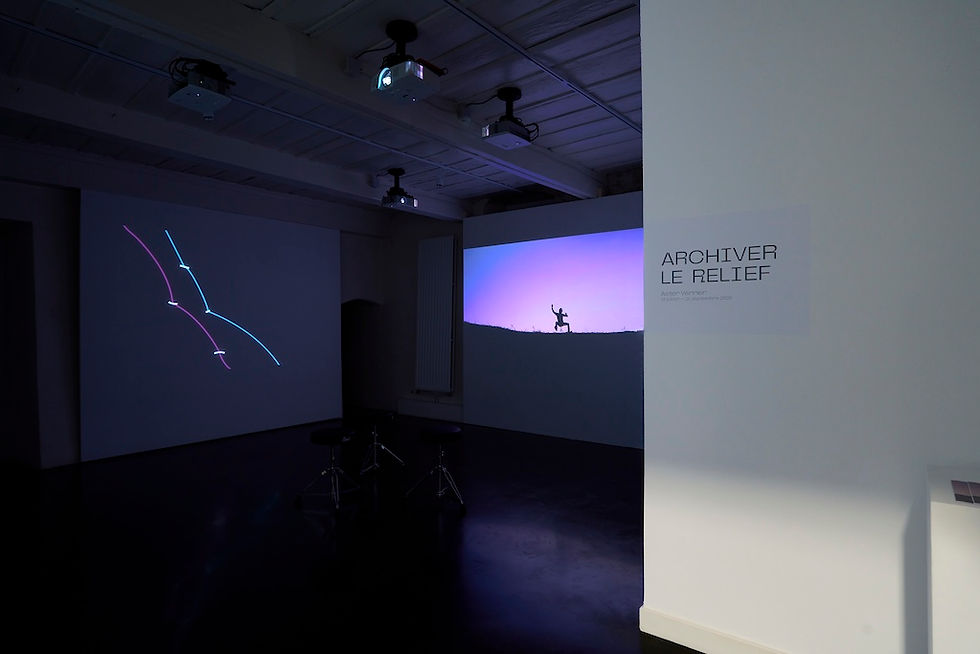
In that sense, Verrier is offering a counter-story to contemporary climbing: a version where the private outweighs the ego, and felt memory matters more than measurable performance.
A political approach, without slogans
Part of what makes Verrier’s work land is how quiet it is. There’s no overt activist pose here, no big declarations—just an implied manifesto embedded in the choices.
“My project is an archiving proposal that can be questioned, and it leaves a lot out,” he says. “It doesn’t necessarily address the debates around climate, or around how we practice climbing. I hope it brings up a contemplative imagination—not the rush to the mountains to bag sends, but more the idea of actually being there and enjoying it.”
In that light, the exhibition shown in Saint-Gervais through September 21 carries extra weight. Visitors who don’t climb discover a version of climbing stripped of its sports codes. Experienced climbers, meanwhile, end up reflecting on their own habits.
“The most surprising thing is how positive the climbing community’s response has been,” Verrier says, “even though they know exactly what my archives leave out.”
That’s the point. He wanted a space where the conversation could happen—quietly, productively—far from the loudest versions of the sport, and toward a shared way of thinking about memory, landscape, and what human movement means inside all this change.
A living heritage, even as the mountains shift
Verrier isn’t claiming he can stop the mountains from falling apart. But he’s insisting on something else: if the relief fades, the gestures don’t have to vanish with it.
His project—dense with meaning, held tight with emotion—asks you to move past simple nostalgia for a disappearing landscape. It suggests a different kind of attention, a different way to face the future. A fragile, precise “vertical dance” that reminds you that even in collapse, something fundamental can remain.
The movement. The quiet poetry of bodies hanging in space.


