
Vertige Media: How did you come to combine philosophy and climbing?
Raúl Antón : Philosophy is a lens for trying to understand the world. When you study it—which I have—it ends up finding its way into every part of life: friendships, romantic relationships, work, and of course climbing. For me, it’s just natural. Every time I teach, philosophical ideas come up, because that’s how I speak and how I think.
Vertige Media : So climbing becomes a way to talk about philosophy?
Raúl Antón : At the entrance to the Temple of Apollo, the words “Know thyself” are carved in stone. That’s one of the foundations of Greek thought when it comes to understanding the world. In that sense, philosophy looks like the broader form of knowledge, and climbing like a simple practical tool. But take a concept like a growth mindset: focusing not on the final result, but on the process that gets you there. A climber gets that idea right away, because it’s built into daily life. You might put 50 attempts into a project—the route you’re working—before finally sending it. And once you clip the chains, the anchor at the top, you realize the most valuable part was actually those two weeks spent trying to link the route, along with all the smaller goals you set along the way. In a case like that, is climbing a philosophical tool—or is philosophy a way of understanding climbing?
"Climbers spend a huge amount of time asking themselves how to manage their mind. There aren’t many sports where fear, anxiety, insecurity, but also strength and self-esteem, are so openly present, and those are deeply philosophical ideas"
Vertige Media : Couldn’t you say the same thing about any sport?
Raúl Antón : Everyone has to learn to know themselves in order to become a better athlete, just as they do to become a better father or mother, citizen, or politician. So yes, you can talk about philosophy in soccer just as easily as in golf.
That said, I think climbing has something different about it, something almost magical.
The newsletter that lifts you higher
Every Wednesday: the editorial team’s column, the best articles, and plenty of surprises to help you climb higher — in mind and in spirit.
Vertige Media : How would you describe that difference?
Raúl Antón : The mind plays a fundamental role in climbing. If a climber neglects that part of it, they won’t improve. Someone who is afraid of heights and never works on that fear won’t get more than 10 feet off the ground.
Climbers spend a huge amount of time asking themselves how to manage their mind. There aren’t many sports where fear, anxiety, insecurity, but also strength and self-esteem, are so openly present, and those are deeply philosophical ideas. On a soccer field, I can hide my lack of confidence from my teammates. In climbing, if I’m scared, I’m going to feel it completely. I’ll sweat, I’ll lose my breath, and I’ll feel that fear all the way through the route. I can’t hide it.
Vertige Media : People often say there’s a philosophy of life behind climbing. Do you agree with that phrase?
Raúl Antón : That expression is often misused to describe a lifestyle. Climbers often make life choices around their passion: taking a job that may be unstable but flexible, so they have more freedom to climb. There’s also that familiar image of the athlete traveling around in a van and striking up a conversation with anyone in the parking lot at a crag. In that sense, climbers do form a kind of tribe.
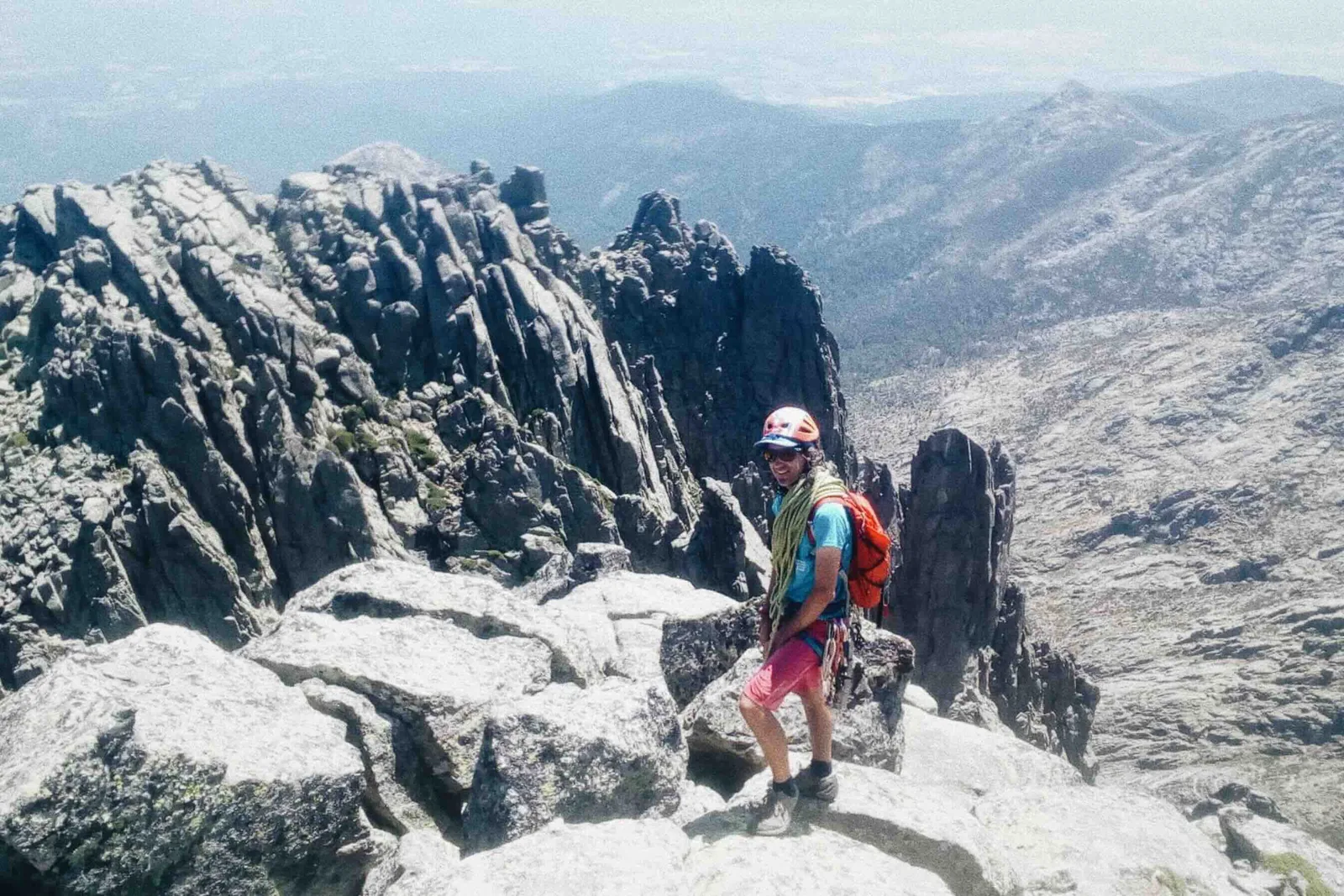
Vertige Media : In one of your weekly cards, you talk about the idea of community. Why did you choose to unpack that?
Raúl Antón : It’s especially true in climbing: other people are not your rivals. They’re the reason the whole thing is possible. I need someone to belay me, or to spot me on a boulder problem—a person helping protect a fall. I’m competing with myself, regardless of what anyone else is doing. And the people around me are the ones looking out for me so I can push past my limits.
That feeling is both a little wild and completely logical, and it’s also a deeply countercultural philosophical value.
Vertige Media : What do you mean by that?
Raúl Antón : The society we live in pushes us to compete with other people, whether at work, in our social lives, or anywhere else. That’s the basic logic of capitalism. Climbing breaks with that dominant way of thinking, the one that teaches us to see others as opponents.
A lot of climbers are stronger than I am. Watching Dani Andrada, the Spanish pro climber, tick his 30th 5.14b (8c) of the year makes me want to do my own first climb at that level. That kind of competition with yourself forces you to know yourself better and work on your self-esteem, your identity, and your physical condition. It can make you a stronger, more resilient person—and help you use that strength whether you’re trying to send a project, nail a job interview, or survive your next Tinder date.