
Fontainebleau After the Fire: What Are Climbers Really Mourning?
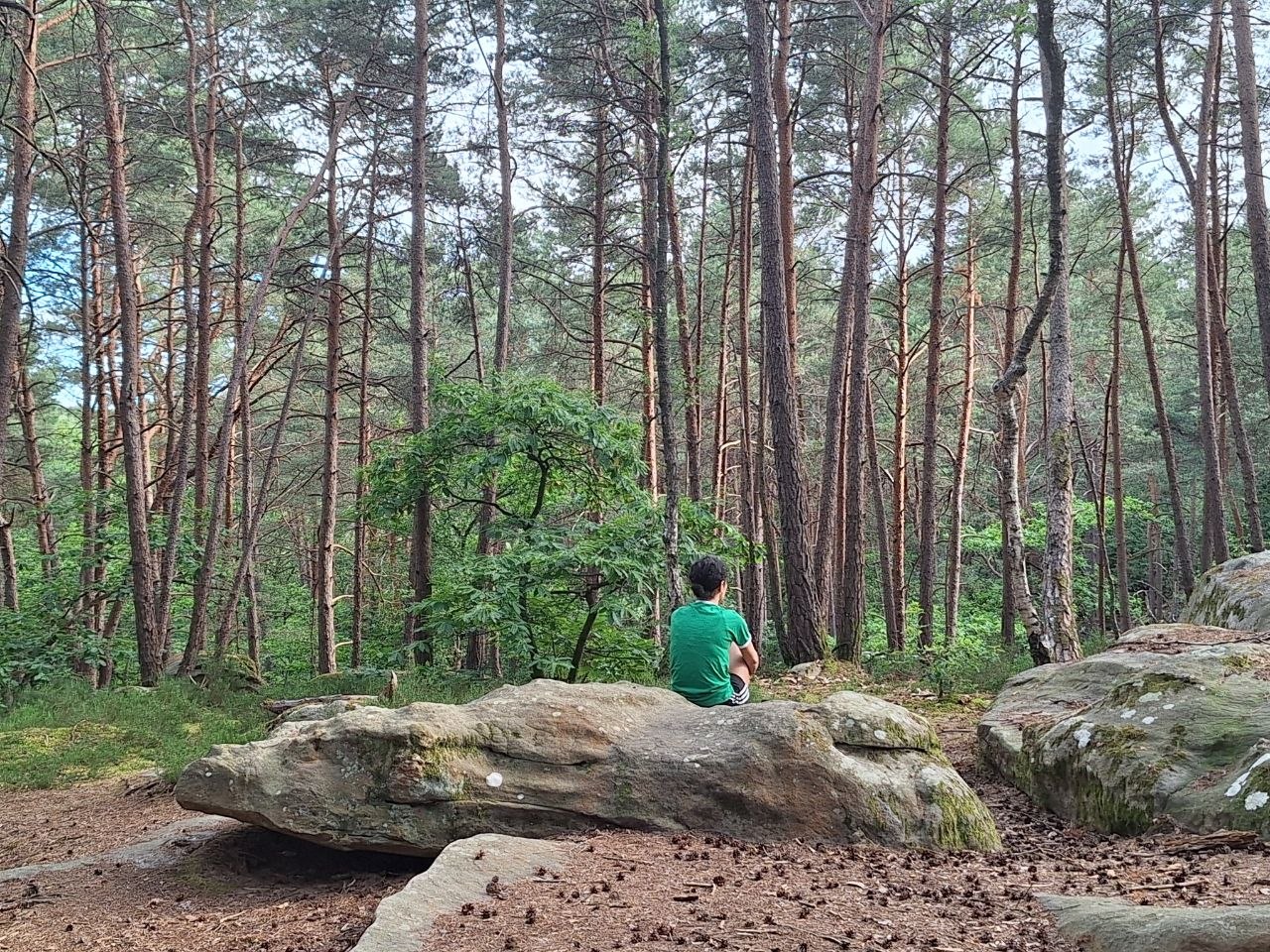
Three months after a wildfire burned more than 4,900 acres of Fontainebleau Forest, the arguments over access restrictions, codes of conduct, and climbing freedom show no sign of dying down. But why does a collection of sandstone boulders inspire such a powerful sense of loss? The answer may depend on where you stand—and what the forest means to you.

First came the images. Plumes of smoke rising above the pines, familiar boulders filmed from a distance, Instagram Stories that read like obituaries. In July 2026, more than 4,900 acres of Fontainebleau Forest burned in a matter of days, on a scale not seen since 1943. Then came the words. So many words: grieving posts on social media, heated discussions in climbing clubs, public meetings, and op-eds signed by climbers, researchers, and longtime figures in the bouldering community. Access restrictions, rules of conduct, the freedom to climb: three months later, the arguments over what comes next are still far from settled, and rarely calm.
Everyone has their own idea of what the forest should be. But read enough of these statements and one thing stands out: almost everyone talks about love. They're not necessarily talking about the same thing. So when we mourn Bleau, as climbers call Fontainebleau, what exactly are we mourning?
The Bleau Dream
"I thought my whole life was going to go up in smoke." This account, collected by Vertige Media and Reporterre in the aftermath of the fire, captures the depth of the shock. It wasn't just a forest burning. It felt like losing a piece of yourself.
Environmental psychologists have a name for this connection: place attachment. Canadian researchers Leila Scannell and Robert Gifford describe it as a triangle. One corner is the person: the climber who has spent fifteen years wearing out climbing shoes on the same bouldering circuits. Another is the place: the sandstone, the pines, the moss, but also the friends you run into at the base of the boulders. The third is a psychological process, the combination of emotions, memories, and habits that makes a Sunday at Bas-Cuvier, one of the area's oldest climbing sectors and widely considered the birthplace of Fontainebleau bouldering, feel as important as a birthday.
Polish psychologist Maria Lewicka, who reviewed forty years of research on the subject, reached a similar conclusion: the longer we spend somewhere, the more relationships we build and memories we make there, the stronger our attachment becomes. It's about the rock and the people you share it with.
Watch enough climbing videos and you start learning the names of individual boulders, their grades, and their beta—the sequence of moves needed to climb them—before you've ever set foot on the sandstone. You begin to feel like an insider without really knowing the forest itself.
No wonder climbers call themselves "Bleausards." Back in 1976, Canadian geographer Edward Relph argued that a space becomes a place when people give it meaning. He distinguished between insideness, the feeling of being at home somewhere, and outsideness, the feeling of being a stranger. At Bleau, becoming an insider means learning the local vocabulary—color-coded bouldering circuits, pof (a traditional resin-based grip aid), overhangs—and picking up shared references and unwritten rules. You brush the holds. You wipe the sand off your shoes before climbing. Spending time in the forest becomes part of who you are.
Which helps explain why the aftermath still hurts so much. Australian philosopher Glenn Albrecht coined a word for this pain: solastalgia, a kind of homesickness you experience without ever leaving home, when a familiar place changes before your eyes. It also helps explain why arguments over access to the forest get heated so quickly. When something threatens a place you love, it can feel like a threat to your identity. But that raises another question: who, exactly, gets to feel at home at Bleau?
Loving Bleau From Afar
According to a study published in March 2026 by Seine-et-Marne Attractivité and Essonne Tourisme, Fontainebleau sees between 1.1 million and 1.3 million climber-days a year, a measure of the total number of days people spend climbing there. Nearly two-thirds of the climbers who visit come from outside France. That figure deserves a closer look. At climbing clubs, public meetings, and in opinion pieces, it's mostly locals who speak up. Understandably so. They live nearby, climb there every week, and almost feel as though they've lost someone close to them. Yet most people who climb at Bleau live somewhere else, sometimes thousands of miles away, and we barely hear from them. We've spent plenty of time asking what the fire has done to Bleausards. We've spent far less time asking what it's done to people who love the forest from a distance. And that distinction matters.
How do you become attached to a forest you visit for one week a year, or perhaps only once in your life? When you live far away, you experience Bleau from a distance. More often than not, that means through a screen. A 2024 literature review by researchers Maxwel Azevedo-Ferreira and Déborah Moraes Zouain found that appealing images and recommendations shared by other users influence where tourists choose to go, often concentrating visitors at the destinations that receive the most exposure. And on Instagram, the algorithm serves up an endless stream of videos filmed on Fontainebleau's boulders.
That raises an interesting possibility. Back in the 1950s, sociologists Donald Horton and Richard Wohl described what they called a parasocial relationship: the one-sided bond viewers develop with people they see on screen, as though they know them personally.
Could something similar happen with a place? Watch enough climbing videos and you start learning the names of individual boulders, their grades, and their beta—the sequence of moves needed to climb them—before you've ever set foot on the sandstone. You begin to feel like an insider without really knowing the forest itself.
But let's not start complaining about the good old days. Bleau was legendary long before Instagram. Guidebooks, magazines, and bouldering films had already made it a climbing mecca well before Stories existed. And social media has also introduced the forest to people who might otherwise never have visited. The question isn't who loves the forest "more." It's what gets overlooked when that love develops largely through a screen.
It's All About the Project
Watch a bouldering video from Bleau: a climber, a rock, a grade displayed on the screen. The forest? Outside the frame. Everything revolves around technique, difficulty, and individual progress. The attachment becomes focused on a place to perform, with little attention paid to the moss, the wildlife, or the condition of the rock, except when those things might affect the ability to keep climbing. The boulder becomes "our project," a climb we're working toward completing. The forest becomes an extension of the gym.
A more attentive approach to the living world, something more commonly found among trad climbers, who place their own removable protection as they climb, could help us see the forest as a living environment rather than a playground.
German sociologist Hartmut Rosa has described the modern impulse to make the world available to us, to turn it into a checklist of things to experience and achieve. What we lose in the process, he argues, is resonance: a relationship with the world in which we allow ourselves to be changed by what we encounter. At Bleau, after all, climbing has never been just about getting up boulders. In an op-ed published in L'Obs, geographer Pierre-Arnaud Chouvy points out that Fontainebleau's circuits combine walking and climbing, and that walking is an essential part of what it means to "inhabit" the forest. Even an open letter published by Grimper defending freedom of access acknowledges that taking on the rock "requires respect for its fragility." The disagreement is less about whether that respect matters than about how we learn it.
So what if we started by paying more attention to what's around the boulders? Learning to identify plants, understanding how sandstone erodes, knowing where the sand we disturb as we walk ends up. A more attentive approach to the living world, something more commonly found among trad climbers, who place their own removable protection as they climb, could help us see the forest as a living environment rather than a playground. That doesn't mean holding climbers responsible for the fire. But changing what we pay attention to is already a way of deciding what kind of forest we want to protect.
And perhaps that shift could begin closer to home. There are countless places to climb, in France and elsewhere. Why don't we do more to encourage a more thoughtful approach to climbing, closer to where people actually live? As we've seen, the places we're most likely to understand, cherish, and protect are the ones we know best, the ones we return to over the years and where we build relationships. Meanwhile, the kind of one-sided attachment fostered by social media is pushing more and more people to travel hundreds, even thousands, of miles just to tick off a famous boulder. As though you had to climb at "Bleau" to count as a real climber. What comes next for Fontainebleau is still being decided. But one question hangs over the blackened boulders: what's the point of climbing V11, an advanced bouldering grade, in a forest that's going up in smoke?


