
Diary of a Forgotten Pof Bag in Fontainebleau

In Fontainebleau, even the things people leave behind have something to say. Especially when they smell like pine resin, sleep in the sand, and watch a whole generation of climbers come outside looking for what the gym can no longer quite promise. These are the thoughts of a pof bag left at the base of a boulder.
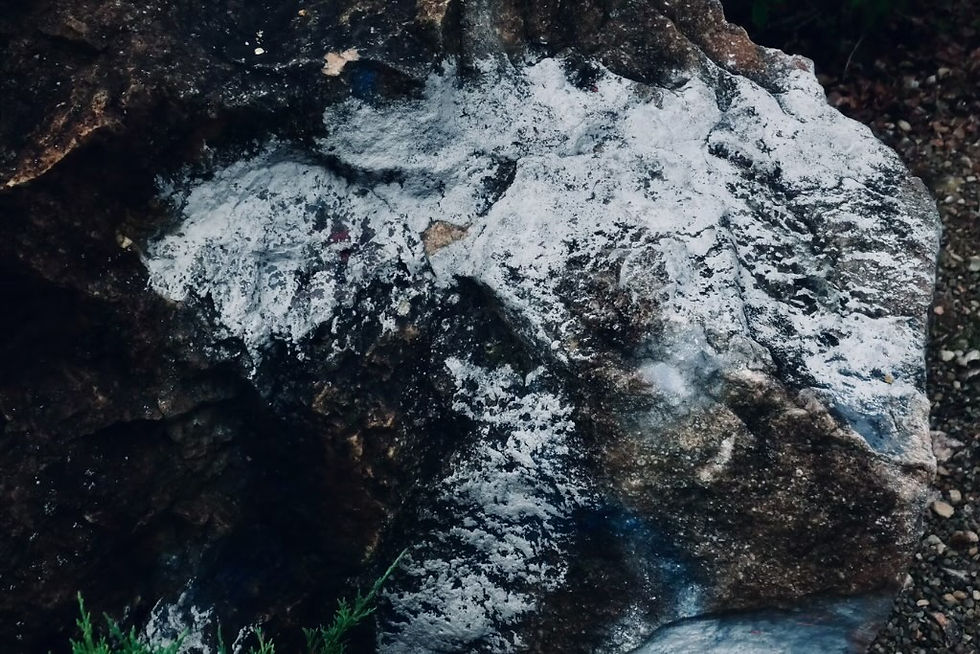
I no longer know exactly how long I’ve been squatting in this patch of sand. Three weeks? Ten years? A full generation of Solutions and Dragos? In Fontainebleau, time doesn’t pass. It settles in. Into the grain of the sandstone, the repainted circuits, the old crash pads, and the springtime promises of gym regulars swearing that this year, finally, they’re going to “climb outside more.”
I’m a pof bag. Or I was. These days, I’m mostly a small textile corpse. A sticky relic from a time when friction smelled like pine resin, not a chemistry lab. Every now and then, someone nudges me with a shoe. Someone takes a picture of me with an ironic emoji. Someone asks, “What is this old-school thing?” And somewhere, in a Bleau parking lot, a purist in canvas pants quietly cries inside his Renault Kangoo.
Back then, people pulled me out with respect. They slipped a hand inside, tapped their palm, and launched toward the crimp with the modest confidence of people who did not need an algorithm to validate their attempt. I’m not saying things were better before. I’m just saying they were less white.
I can already hear the comments. People will say I’m acting like a bitter old bag. That I’m confusing culture with mothballs. That Fontainebleau belongs to no one, and especially not to a little resin pouch abandoned back when people still said “Bleausard” without irony. You would not be entirely wrong. A forest guarded by three old guys in threadbare shorts who can recite the full first-ascent history of Bas-Cuvier without taking a breath is not exactly a democratic ideal.
And the old-timers were not all quiet saints of good style. I’ve seen plenty of self-appointed gatekeepers hold forth on the purity of the rock while leaving behind a cigarette butt, three scraps of tape, and a 20-minute ethics lecture for a beginner whose only crime was putting a pad on a patch of heather. Age does not make you exemplary. It just gives you more memories to justify your own contradictions. Still, the problem is not change. It’s the speed of it.
You came in large numbers: motivated, sincere, full of that wild energy people have when they discover the forest for the first time. It is beautiful to watch waves of climbers leave the fluorescent lights behind and come looking for something else among the pines and sandstone lines. A culture that is not shared becomes a private collection. And private collections always end up gathering dust. But going outside is not just a change of scenery. It is not a bouldering gym with a transparent roof.
Sometimes you show up in Bleau as if you’ve arrived at a new sector inside a concept-store gym. You scroll. You find the line. You check the grade on the app. You watch the beta video — beta meaning the sequence, the how-to. You drop the pads. You film the go. You tick it. You leave. In the meantime, the boulder has turned white, the landing has been chewed up, three chalk ticks have survived your enthusiasm, and someone has delivered the classic line: “Don’t worry, the rain will wash it off.” The lazy gospel of invisible impact.
From my low little lookout in the dirt, I’ve learned to identify the powder tribes. First, there are the plasterers. They don’t chalk a hold. They remodel it. A sloper resists them — a sloping hold, the kind you have to press and trust — and they coat it until they’ve created a cast of their own helplessness. They call it “optimizing conditions.” I call it turning a thousand-year-old sandstone masterpiece into a whiteboard for a crisis meeting.
Next to them are the tick-mark people. Their relationship with rock is purely geometric. A hold does not exist unless it has been underlined in white highlighter. A foothold only counts if it’s marked like a fire-escape route. They don’t read the boulder. They annotate it. It’s touching, really, this way of coming into nature only to recreate the ergonomics of PowerPoint.
Outside begins at the exact moment you start asking what you are leaving behind
And then there are the cosmetic brushers, a very common species. They own a magnificent boar-bristle brush, clipped to their pack with an unnecessarily technical alpine carabiner. They pull it out, give the rock two vague little polite swipes, like dusting off a jacket before a job interview, then walk away convinced they have performed a major ecological act. Spoiler: owning a brush does not make you a guardian of the forest. No more than owning a Netflix subscription makes you a French New Wave director.
I’m exaggerating, obviously. That’s the perk of being an old fossil: I get to be unfair without having to manage the Instagram comments. Thankfully, there are others. The ones who arrive gently. Who look where they place their feet and their pads. Who really brush, before and after their turn. The ones who understand that a boulder is not a product to consume, but a material thing to care for. They know that the beauty of Fontainebleau lies as much in what you send as in what you choose not to leave behind.
You can spot those people quickly. They are not necessarily quieter, because restraint has never stopped anyone from having a strong opinion about heel-hook beta. But their presence weighs less. They do not act as if the forest has been privatized for their training session. They know the rock was there before their project, and that it will outlast them.
Do not treat the rock like a gym wall that forgot to be reset
Pof versus chalk, in the end, is not the point. The real fault line is somewhere else. It separates those who think climbing outside means getting something out of a place from those who understand that you also have to learn how to leave it. Outside begins at the exact moment you start asking what you are leaving behind. Not just the visible trash, the tape, the cans. The habits, too. The noise. The consumer confidence. The comfortable idea that a natural space is basically a free public service with trees around it.
I know. I sound like a cranky old scold. And yet I love watching you climb. Even the rushed ones. Even the plasterers. Even the theorists of “Honestly, this style just doesn’t suit me” after four catastrophic burns. Because sometimes, the magic still happens. A beginner finally understands that you do not pull with your arms so much as push with your feet. A mutant pauses for two seconds from performing and looks at the light through the birches. A child invents a sequence that is absurd and beautiful. Someone lovingly brushes for the next person without turning it into a story. The sandstone gets its mystery back. And I think, maybe not everything is lost.
Cultures do not die when new people arrive. They die when no one takes the time to pass on the tiny habits that hold them up.
So keep your crash pads, your apps, your ultra-technical shoes, and your beta videos. Come. Climb. Fall. Discover. Keep this forest alive. It was never meant to be the private lounge of three nostalgic men. But please, learn how to leave. Brush. Erase. Look. Do not treat the rock like a gym wall that forgot to be reset.
As for me, someone may eventually pick me up. Or I may disappear under the leaves for good, which is another way of vanishing. That’s fine. I’m only a pof bag. But when you head home, at least try to leave the rock less marked up than your ego.


